You have just finished moving into a new apartment in Dubai Marina, and the flat is now full of empty boxes. A shop in Deira has a back room piled with flattened cartons after a delivery. An office in Business Bay has stacked packaging against the wall for two weeks because nobody has time to deal with it. In each case the problem is the same: too much cardboard, not enough space, and no easy way to get rid of it.
A cardboard removal service handles exactly this. It is the process of collecting unwanted cardboard boxes and packaging from a property and taking them away, so the space is usable again. This is not a general cleaning job and it is not the same as clearing furniture or household junk. The focus is specific: cardboard and the packaging that comes with it.
What Is a Cardboard Removal Service?
A cardboard removal service collects unwanted cardboard from a home, business, or any other property and transports it away for appropriate handling. The cardboard usually builds up faster than people expect, especially after deliveries, a move, or a busy retail period.
The material typically includes:
- Moving boxes and packing cartons
- Corrugated cardboard from deliveries
- Appliance and electronics boxes
- Retail and shipping packaging
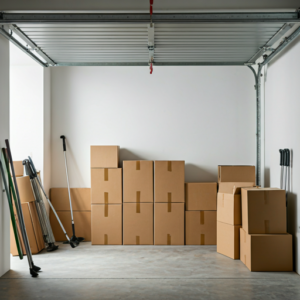
- Flattened boxes stored in garages or back rooms
- Mixed packaging with tape, labels, or plastic still attached
Removing cardboard is different from cleaning. Cleaning deals with dust, dirt, and surfaces. Cardboard removal deals with bulky, awkward packaging that takes up floor space and is difficult to fit into a normal bin. The two jobs sometimes happen together, but they are separate tasks.
When Do You Need Cardboard Removal in Dubai?
Cardboard has a habit of piling up quietly until it becomes a real problem. Common situations include:
- After moving house or office — every item that was packed leaves behind a box.
- After large deliveries — furniture, appliances, and electronics arrive in heavy cartons.
- E-commerce and online orders — regular online shopping creates a steady stream of packaging.
- Retail restocking — shops receive stock in cardboard and need the back room cleared.
- Renovation or fit-out work — new fixtures and materials arrive heavily packaged.
- Events, pop-ups, and exhibitions — setup generates cardboard that has to go before the next stage.
- Warehouse and stockroom turnover — inbound goods leave cartons behind daily.
- Seasonal clear-outs — accumulated boxes from months of storage.
If you are running out of floor space, tripping over flattened boxes, or a bin is already overflowing, that is usually the point where a dedicated collection makes sense.
What Can Be Removed During a Cardboard Collection?
Not every cardboard job looks the same. A single apartment move produces a different volume from a retail store’s weekly restock. Below are the main types handled during a cardboard removal.
Moving and Packing Boxes
The most common category. After a relocation you are often left with dozens of used cartons, wardrobe boxes, and packing paper. These are bulky when full and awkward even when flattened, and they rarely fit into standard building waste bins.
Delivery and Packaging Cardboard
Furniture, appliances, and large electronics arrive in thick corrugated cardboard, sometimes with foam and plastic inserts. These oversized boxes are among the hardest to store and the most useful to have collected in one go.
Retail and Business Packaging
Shops, cafés, salons, and offices receive stock and supplies in cardboard. It builds up quickly in stockrooms and behind counters. A regular or one-off cardboard collection keeps the space clear and the fire exits unobstructed.
Flattened and Stored Cardboard
Many people flatten boxes and stack them in a garage, spare room, or balcony, meaning to reuse or dispose of them later. When that pile grows past a certain point, having it collected clears the space in a single visit.
Mixed Packaging
Some cardboard arrives with tape, staples, labels, plastic wrap, or polystyrene attached. A removal team can take this away, though separating clean cardboard where possible usually helps with downstream recycling.
Cardboard Removal for Homes, Apartments, and Villas
Residential cardboard removal is shaped by the type of property and how the building is accessed.
In an apartment, the challenge is usually movement. Boxes may need to travel down corridors, into a service lift, and out through a loading area or parking bay. Buildings in areas such as Dubai Marina, JLT, Business Bay, and Jumeirah Village Circle often have set times for using the service lift, so it helps to know those in advance.
In a villa — for example in Jumeirah, Al Barsha, Arabian Ranches, or Dubai Hills Estate — there is often more room to work with, but the cardboard can also be spread across a garage, storeroom, garden area, and several floors. Driveways and gated access affect how the collection vehicle is positioned.
For both property types, gathering the cardboard into one accessible spot before the team arrives makes the collection faster.
Cardboard Removal for Offices and Businesses
Commercial cardboard removal has its own rhythm. Offices, shops, and warehouses generate packaging continuously rather than all at once, so the need is often recurring rather than one-off.
Typical business scenarios include:
- Office relocations and desk deliveries
- Retail stores clearing stockroom cardboard after restocking
- E-commerce and fulfilment operations with steady inbound packaging
- Warehouses receiving palletised goods in cartons
- Fit-outs and refurbishments where new equipment is unboxed
For businesses, keeping cardboard cleared is partly about space and partly about keeping walkways, exits, and back rooms safe and workable. Some businesses arrange a single large collection; others prefer a regular schedule.
Cardboard Removal After a Move
Moving is the single biggest source of household cardboard. Once the furniture is in place, the boxes become the problem.
Practical steps for a smoother post-move clear-out:
- Empty every box fully before flattening it
- Remove packing paper, bubble wrap, and foam inserts
- Flatten cartons to save space and speed up loading
- Keep any boxes you genuinely want to reuse separate from the rest
- Stack the flattened cardboard near the door, lift, or driveway
- Check whether your building needs advance notice for a collection vehicle
Leaving this until the last minute is where most people run into trouble, especially in apartments with restricted lift access.
The Cardboard Removal Process
Every provider works slightly differently, but a typical cardboard collection follows a clear sequence:
- Confirm the property, location, and rough volume of cardboard
- Identify where the cardboard is stored across the property
- Check access — lifts, stairs, parking, and loading points
- Flatten and gather boxes into a single collection area where possible
- Load the cardboard onto the vehicle
- Transport it away from the property
- Direct it toward appropriate downstream handling
The exact procedure and timing depend on the amount of cardboard, the type of property, and how easy the space is to reach.
How to Prepare a Property for Cardboard Collection
A little preparation makes the whole job quicker:
- Empty all boxes completely so nothing useful is thrown out by mistake
- Flatten cartons to reduce their volume
- Separate clean cardboard from heavily taped or plastic-wrapped packaging where you can
- Bring boxes down from balconies, mezzanines, and upper floors if it is safe to do so
- Clear a path from the storage area to the exit
- Confirm service-lift availability in apartment buildings
- Reserve a loading or parking spot if your building requires one
You do not need to remove every piece of tape or label — the team can handle mixed packaging — but flattening and grouping the cardboard is the single most useful thing you can do.
Cardboard Removal and Responsible Disposal
Cardboard is one of the more recoverable materials, which is why it is worth handling thoughtfully rather than simply throwing in general waste. After collection, cardboard may follow routes such as:
- Recycling and material recovery
- Reuse, where boxes are still in good condition
- Appropriate disposal for damaged or contaminated packaging
The route any particular load takes depends on the condition of the cardboard, how clean it is, the quantity, and the processing options available at the time. Cardboard that is wet, greasy, or heavily mixed with plastic and foam is harder to recycle than clean, dry, flattened boxes. It is realistic to say that cardboard removal supports recycling where practical — but no honest service can promise that every single piece is recycled in every case.
Cardboard Removal Cost Factors
Prices are not fixed, because no two cardboard jobs are identical. The main factors that affect a cardboard collection include:
- Total volume of cardboard
- Whether boxes are flattened or still assembled
- Property type and size
- Number of floors and use of stairs or lifts
- Distance from storage area to the vehicle
- Parking and loading access
- Whether the collection is one-off or recurring
- Timing and scheduling requirements
Rather than assume a figure, it is best to describe your situation — property type, rough volume, and location — so a suitable collection can be arranged.
Common Cardboard Removal Mistakes
A few recurring mistakes make cardboard harder to deal with than it needs to be:
- Leaving the clear-out until the day of a move or event
- Not flattening boxes, so they take up far more space than necessary
- Storing cardboard on a balcony where it gets rained on and becomes unusable
- Forgetting cartons hidden in garages, stockrooms, or under desks
- Mixing cardboard with foam, plastic, and general waste unnecessarily
- Underestimating how much cardboard a large delivery or move actually produces
- Ignoring building access rules until the vehicle has already arrived
Most of these are easy to avoid with a little planning.
Cardboard Removal vs General Junk Removal
These services overlap but are not the same thing, and choosing the right one saves time.
| Cardboard Removal | General Junk Removal | |
|---|---|---|
| Main focus | Boxes, cartons, and packaging | Mixed unwanted items |
| Typical items | Flattened and assembled cardboard | Furniture, appliances, household clutter |
| Best for | Post-move, deliveries, retail restock | Broad clear-outs and mixed loads |
| Recovery | Cardboard often recyclable | Varies widely by item |
If your problem is specifically boxes and packaging, a focused cardboard collection is usually the better fit. If you also need furniture, appliances, and general clutter cleared, a broader clear-out may suit you better. For those larger, mixed jobs, our junk removal service in Dubai covers a wider range of items.
How to Choose a Cardboard Removal Service in Dubai
A practical checklist when deciding who to book:
- They handle the volume you actually have, from a few boxes to a full load
- They can work with your property type — apartment, villa, office, shop, or warehouse
- They understand building access, lifts, and loading in Dubai towers
- They offer one-off collections as well as recurring schedules for businesses
- They handle mixed packaging, not only perfectly clean cardboard
- They direct cardboard toward recycling and appropriate disposal where practical
- They communicate clearly on timing and what is included
Be cautious of anyone making claims they cannot back up. A dependable service sets realistic expectations rather than promising the impossible.
Benefits of Using a Cardboard Removal Service
The advantages are practical rather than dramatic:
- Frees up floor space in homes, offices, and stockrooms
- Removes the hassle of transporting bulky boxes yourself
- Clears cardboard quickly after a move or delivery
- Keeps business walkways, exits, and back rooms usable
- Supports recycling of clean cardboard where practical
- Handles awkward, oversized packaging that does not fit normal bins
- Lets you deal with a big pile in a single collection
Ready to Clear the Cardboard?
If your home, office, or shop is filling up with boxes and packaging, a focused collection is the simplest way to get the space back. Contact our team to describe your property and the amount of cardboard you have, and we can arrange your collection at a time that works for you. Whether it is a single post-move clear-out or a regular pickup for a busy business, we can help you book your collection and take the cardboard off your hands.
Frequently Asked Questions
What does a cardboard removal service include?
It includes collecting unwanted cardboard boxes and packaging from your property, loading them, and transporting them away. This covers moving boxes, delivery cartons, retail packaging, and flattened cardboard, whether from a home or a business.
Do I need to flatten the boxes before collection?
Flattening is not always required, but it helps a lot. Flattened cardboard takes up less space, loads faster, and is easier to recycle. If you are unable to flatten everything, the team can still collect assembled boxes.
Can you remove cardboard from a high-rise apartment?
Yes. Cardboard can be collected from apartments in high-rise buildings, using the service lift and loading areas. It helps to confirm your building’s lift access times and reserve a loading spot in advance where required.
Do you handle cardboard from offices and shops?
Yes. Offices, retail stores, cafés, and warehouses often generate cardboard regularly. Collections can be arranged as a one-off clear-out or on a recurring schedule to keep stockrooms and back areas clear.
What happens to the cardboard after it is collected?
Clean, dry, flattened cardboard is well suited to recycling and material recovery, and boxes in good condition may be reused. The final route depends on the condition and quantity of the cardboard and the processing options available.
Can you take cardboard mixed with tape, plastic, or foam?
Yes, mixed packaging can be collected. Separating clean cardboard from plastic and foam where you can helps with recycling, but you do not need to remove every label or piece of tape yourself.
How much cardboard can be collected at once?
Collections range from a small stack of moving boxes to a large volume from a business or warehouse. The amount, property type, and access affect how the collection is arranged, so it helps to describe your situation when booking.