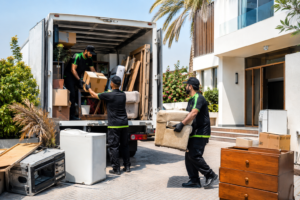
A gardener spends the morning trimming the hedges and cutting back the palms, and by midday the driveway is stacked with fronds, branches and bags of grass clippings that nobody has anywhere to put. A villa owner finishes a garden makeover and is left with old turf, piles of soil and uprooted plants. A tenant clears an overgrown yard before handing back the keys. In each case the plants have been dealt with — what remains is the green waste, and it has to leave the property.
A garden waste removal service in Dubai handles exactly that: collecting and taking away the leaves, clippings, prunings, branches, palm fronds and other garden material left behind after gardening, landscaping or a clear-out. Garden waste is bulky, awkward and often heavy once it’s bagged, and villa driveways, community access rules and the sheer volume after a big trim all make it hard to shift on your own. This guide explains what garden waste removal covers, when people use it, what can be collected, and how to prepare, so you know what to expect before you arrange a collection.
What Is a Garden Waste Removal Service?
A garden waste removal service collects garden and green waste from a property and takes it away. The work usually runs in a clear sequence:
- Identifying the garden waste that needs to go
- Assessing how much there is and how heavy it is once bagged
- Checking driveway, gate and access to where the waste is piled
- Gathering and loading the material onto a vehicle
- Transporting it away from the property
- Arranging an appropriate route for the green waste afterwards
The exact scope varies by provider. Some collect a few bags of clippings, others clear a whole garden’s worth of prunings, soil and turf after landscaping. What’s accepted also differs, so large tree trunks, big volumes of soil, or waste mixed with construction debris are worth mentioning before collection rather than assuming they’ll be taken on the day.
When Do You Need Garden Waste Removal?
Garden waste piles up in a range of everyday situations across Dubai:
- After a gardener trims hedges, cuts grass or prunes trees and palms
- Following a garden makeover or landscaping project
- Clearing an overgrown or neglected garden
- Seasonal cutting back and tidying
- Removing old turf, plants or shrubs being replaced
- Clearing weeds, roots and dead plants
- Getting a villa garden ready for sale, handover or new tenants
- Tenant move-outs where the yard needs clearing
- Regular upkeep of larger villa gardens that generate a lot of clippings
- Disposing of bags of soil, sand or gravel left over from garden work
The common thread is that the gardening itself is done, and what’s left is the green waste that needs to be collected and taken off the property.
What Types of Garden Waste Can Be Removed?
Most typical garden and green waste can be collected. It helps to group it by type, because soft clippings and heavy soil are handled quite differently.
Soft and Green Waste
- Grass clippings
- Leaves
- Weeds and dead plants
- Small prunings and cuttings
- Flowers and bedding plants being cleared
Woody Waste
- Branches and twigs
- Hedge trimmings
- Tree prunings
- Palm fronds
- Small tree offcuts
Soil, Turf and Heavier Material
- Old turf and grass rolls
- Soil and topsoil
- Sand and gravel from garden work
- Uprooted plants with soil attached
Other Garden Items
- Old plant pots and planters
- Bags of garden waste already filled
- General garden clearings after a tidy-up
Not every provider takes every type. Large tree trunks or logs, very heavy loads of soil, or garden waste mixed in with rubble and construction debris should be described in advance so the right vehicle and enough hands are sent. Green waste is also usually kept separate from general household junk, since it may follow a different onward route.
Garden Waste Removal from Villas in Dubai
Villas are where most garden waste in Dubai comes from, simply because that’s where the gardens are. A single villa garden can produce a surprising amount after a full trim — palm fronds alone are bulky and awkward to carry. The details that affect a villa collection include:
- Driveway access and space for a vehicle to load
- Whether the waste is at the front, in a side passage or in a back garden
- Gates, steps or narrow passages between the garden and the road
- How far the material has to be carried to the vehicle
- The total volume and weight once everything is gathered
- Community rules on green waste and access times
Sharing accurate details upfront — roughly how much waste there is, whether it’s bagged or loose, and how the team can reach it — makes planning far easier. Garden waste removal is a regular request in villa communities such as Arabian Ranches, Dubai Hills Estate, Jumeirah, Al Barsha and Mirdif, where larger plots and mature planting mean regular clippings and prunings.
Garden Waste from Townhouses, Small Gardens and Balconies
Not every garden is a large villa plot. Townhouses, smaller homes and even planted balconies and terraces produce green waste too, usually in smaller amounts:
- Clippings and leaves from compact gardens and courtyards
- Trimmings from balcony and terrace plants
- A few bags after a seasonal tidy-up
- Old pots and plants being cleared from a smaller space
For these, the main considerations are access to the garden or balcony, whether the waste has to come through the home, and any building or community access arrangements. Smaller volumes are still worth collecting properly rather than letting bags sit around.
Garden Waste After Landscaping or a Garden Makeover
Redoing a garden creates its own kind of waste, and often a lot of it at once. When new landscaping goes in, what comes out can include:
- Old turf and lawn being replaced
- Removed shrubs, hedges and plants
- Excess soil, sand and gravel
- Uprooted roots and stumps from cleared beds
- Offcuts and trimmings from new planting
This material tends to be heavier and more mixed than routine clippings, so it helps to say in advance whether there’s a large volume of soil or turf, and whether any of it is mixed with paving offcuts or rubble. If the leftover is mostly construction debris rather than green waste, that’s a broader cleanout rather than garden waste removal alone.
How the Garden Waste Removal Process Works
A typical garden waste collection follows a practical order:
- Identify the garden waste to be removed
- Separate anything that isn’t green waste, such as general junk or rubble
- Note heavy loads like soil, turf or large branches
- Check how the team will reach the waste and where they can load
- Confirm driveway access and any community access times
- Arrange a collection time
- Gather and, where needed, bag the material
- Load it onto the vehicle
- Transport it away from the property
- Send the green waste on an appropriate onward route
The exact steps shift with the garden and the provider. A few bags from a townhouse is quick; a full villa garden after a makeover is planned in more detail.
How to Prepare Garden Waste for Collection
A little preparation makes collection faster and keeps costs and effort down:
- Gather the waste into one accessible spot where possible
- Bag loose clippings, leaves and small trimmings if you can
- Keep soil and turf separate from soft green waste
- Set aside anything that isn’t garden waste, like household junk or rubble
- Break down or stack long branches and fronds neatly where safe to do so
- Note any unusually heavy loads so the team is ready for them
- Clear the path from the garden to the driveway or gate
- Confirm there’s space for the vehicle to park and load
- Check any community rules on access times or green waste
Leave the moving of very heavy material — large soil loads, big logs or thick trunks — to the collection team, who have the people and equipment for it. Dragging heavy bags or lifting awkward branches alone is how injuries happen.
Removing Bulky or Heavy Garden Waste
Some garden waste is far heavier or more awkward than a bag of grass suggests. Wet soil, rolls of old turf, thick tree branches, palm trunks and large root balls all add up quickly in weight. Even a modest volume of soil can be surprisingly heavy once it’s bagged.
For these, the amount, the weight, and how far it has to be carried to the vehicle all affect how the removal is handled — and sometimes whether more than one load is needed. This is why heavy material is worth flagging when you arrange the collection. No responsible service can promise to clear any volume of soil, turf or timber without first understanding how much there is and how the team can reach it.
What Happens to Garden Waste After Removal?
Once garden waste leaves a property, there are a few possible routes for it:
- Green waste recycling or composting — suitable organic material may be processed into compost or mulch where facilities allow
- Material recovery — some material may be recovered or reused where practical
- Appropriate disposal — waste that can’t be reused or processed is disposed of properly
Which route applies depends on what the waste is, its condition, whether it’s mixed with soil or other material, and the green-waste processing options actually available. Not all garden waste can be composted or recycled, and it would be misleading to claim otherwise. The realistic goal is to send each load down the most suitable route available for what it contains.
Garden Waste Removal vs Junk Removal
Junk removal is the broader category. It covers many kinds of unwanted items — furniture, appliances, general clutter, boxes and more. Garden waste removal is more specific: it deals with green and garden waste and the practical demands of handling clippings, prunings, soil and turf.
The distinction helps when you’re deciding what to book. Someone clearing a mix of old furniture and household items needs broader junk removal. Someone left with fronds, clippings and soil after gardening needs garden waste removal. If your pile is mostly green waste with a few non-garden items mixed in, it’s worth mentioning both so the right vehicle turns up.
Garden Waste Removal vs Gardening and Landscaping Services
Gardening and landscaping services do the work in the garden — the trimming, planting, turfing and design. Garden waste removal deals with what’s left over once that work is finished: the material that has to be collected and taken away.
The two often overlap in timing, since gardening and landscaping are exactly what generate the waste. Some gardeners clear their own waste, and some don’t, or only take part of it. If your gardener leaves the green waste behind, a dedicated collection is what moves it off the property.
Garden Waste Removal vs Garden Clearance
These terms overlap, and people often use them interchangeably. In practice, garden waste removal tends to emphasise collecting and taking away the waste itself — the bags, the fronds, the pile by the driveway. Garden clearance is sometimes used more broadly, for clearing out an entire overgrown or neglected garden, which may also involve cutting things back before anything is removed. If your garden simply needs the existing waste taken away, “removal” fits; if it needs clearing from an overgrown state, “clearance” describes the wider job.
Garden Waste Removal Cost Factors
Requirements differ from garden to garden, so it makes sense to look at what actually shapes a collection rather than expecting a single fixed figure. The main factors include:
- The total volume of garden waste
- The weight, especially with soil, turf and wet material
- The type of waste — soft clippings versus heavy or woody material
- Whether it’s bagged and gathered or loose and spread out
- Access to the garden and how far the waste must be carried
- Driveway space and parking for the vehicle
- The labour the job needs
- Any large trunks, stumps or unusually heavy loads
- The timing of the collection
A few bags from an easily accessed driveway is a very different job from clearing a full villa garden of soil, turf and prunings. Sharing accurate details about the volume and access is the best way to get requirements assessed properly.
Common Garden Waste Removal Mistakes
A few avoidable slip-ups tend to cause delays on collection day:
- Underestimating how much waste a full trim actually produces
- Mixing green waste with rubble, household junk or general rubbish
- Leaving soil and turf loose instead of contained
- Not gathering the waste into one accessible spot
- Forgetting to check driveway or gate access
- Overlooking community rules on access times
- Letting bags sit out for days where they can spill or attract pests
- Assuming heavy soil loads are as light as bags of clippings
- Trying to move large branches or heavy bags without proper help
Most of these come down to gathering the waste sensibly and describing the job accurately before the team arrives.
How to Choose a Garden Waste Removal Service in Dubai
When you’re comparing options, a short checklist keeps the focus on what matters:
- The types of garden waste they collect, and whether yours fits
- Experience with bulky green waste like fronds, branches and turf
- Ability to handle heavier loads such as soil and old turf
- Work across the property types you have — villas, townhouses and smaller gardens
- Sensible access planning for driveways and community rules
- Flexible collection scheduling
- Their own transport for taking the waste away
- Clear communication before and on the day
- An appropriate onward route for green waste
Judge these on what a provider can actually confirm about your specific garden, rather than on broad promises.
Frequently Asked Questions
What does a garden waste removal service include?
It typically covers identifying the garden waste, checking access, gathering and loading the material, transporting it away, and arranging a suitable onward route. The precise scope depends on the provider and the garden.
Can palm fronds and tree branches be removed?
Yes, fronds, branches and prunings are among the most common garden waste collected in Dubai. For large trunks or very thick branches, it helps to describe them in advance so the right vehicle and enough hands are arranged.
Can you remove soil and old turf?
Soil, old turf and similar heavy material can often be collected, but weight and volume matter. Because these loads are much heavier than clippings, it’s best to mention roughly how much there is when arranging the collection.
Do I need to bag the garden waste first?
It helps. Bagging loose clippings and leaves and gathering everything into one accessible spot makes collection faster, though larger branches and fronds can usually be stacked rather than bagged.
Can garden waste be collected from a villa community?
In most cases, yes. The key factors are driveway access, how far the waste must be carried, and any community rules on access times, so it’s worth checking those before the collection.
What information should I provide before arranging collection?
Useful details include roughly how much waste there is, the type — clippings, branches, soil or turf — whether it’s bagged, where it’s located, and how the team can reach it. The more accurate the information, the better the collection can be planned.
What happens to garden waste after removal?
Depending on what it is and its condition, suitable green waste may be composted or recycled where facilities allow, some material may be recovered, and the rest is disposed of appropriately. Not every load can be composted or recycled.
Is garden waste removal the same as junk removal?
No. Junk removal covers many kinds of unwanted items, while garden waste removal focuses specifically on green and garden waste. If your pile mixes both, it’s worth mentioning so the right service is arranged.
Book Your Garden Waste Collection in Dubai
Whether it’s a few bags of clippings from a townhouse, a driveway stacked with palm fronds and branches, or a full villa garden left with soil and old turf after a makeover, a collection is easiest when the details are clear from the start. Tell us what’s in the garden and how the team can reach it, and we’ll help plan a collection that fits. Contact our team to book your garden waste collection.