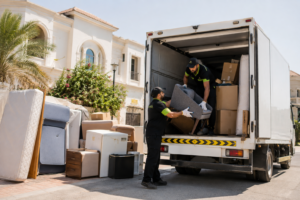
A coffee shop closes at the end of its lease, a cafe rebrands and strips out its old fit-out, or an owner sells up and the space has to be handed back empty: whatever the reason, a cafe is full of things that are awkward to clear. Counters, espresso machines, display fridges, tables and chairs, shelving, signage, and a back room of packaging and supplies all have to go, often on a tight deadline. Cafe & coffee shop clearance in Dubai is the service that empties these spaces of furniture, equipment, and waste so the unit can be handed over or refitted.
This guide explains what cafe and coffee shop clearance covers, what typically needs removing, what to check before equipment is cleared, and how the service differs from a standard junk removal. It also sets realistic expectations around fixed equipment, access, and what happens to the items afterwards.
What Is Cafe & Coffee Shop Clearance?
Cafe and coffee shop clearance is the removal of furniture, equipment, fixtures, and waste from a cafe or coffee shop so the space is left empty. In practice that means clearing the seating and tables, counters and back-bar units, coffee equipment, display fridges, shelving, signage, and any leftover stock or packaging, then loading and transporting it all away.
It is worth separating clearance from a deep clean and from a fit-out. It is not primarily a cleaning service, and it is not shop-fitting or installation. Cafe and coffee shop clearance focuses on removing the unwanted contents so the unit can be handed back, refitted, or taken over by the next tenant.
What Gets Cleared From a Cafe or Coffee Shop
The contents vary by size and style, but most clearances involve a similar set of items. Common categories include:
Furniture and Seating
- Tables, chairs, stools, and booth seating
- Outdoor terrace furniture and parasols
- Waiting-area and lounge seating
Counters, Fixtures, and Shelving
- Service counters and back-bar units
- Display shelving and retail stands
- Menu boards and non-fixed partitions
Equipment, Signage, and Back-of-House
- Coffee machines, grinders, and blenders
- Display fridges, chillers, and under-counter units
- Microwaves, toasters, and small appliances
- Signage, branding, and decor
- Leftover stock, packaging, and general waste
Whether a specific item can be handled depends on its size, weight, and whether it is free-standing or fixed. Built-in counters, plumbed or gas-connected equipment, and fixed electrical installations usually need qualified disconnection before removal; the clearance focuses on the loose furniture, equipment, and waste within the provider’s confirmed scope.
When Do You Need Cafe & Coffee Shop Clearance in Dubai?
Dubai’s cafe scene turns over quickly, so clearances come up often. Typical situations include:
- A cafe or coffee shop closing down
- Relocating to a new unit
- A refurbishment or rebrand stripping out the old fit-out
- End-of-lease handover where the unit must be returned empty
- A change of ownership or concept
- Upgrading equipment and clearing the old machines
- Clearing a failed or unfinished fit-out
In each case the aim is the same: the contents need to leave the unit, usually by a set date, so it can move to its next stage.
Equipment and Fixtures: What to Check First
Cafes contain more built-in and connected equipment than most spaces, so a few checks matter before clearance. Coffee machines, dishwashers, and sinks are often plumbed in, some equipment is connected to gas or fixed electrical supplies, and display fridges and chillers contain refrigerant.
Plumbed, gas, and fixed electrical equipment should be disconnected by a suitably qualified person before it is removed. Where a fridge or chiller contains refrigerant, that gas should be recovered by a qualified technician before the unit is scrapped, rather than released. This article does not cover disconnecting services, handling gas, or dismantling fixed installations; those tasks belong to qualified professionals. Flagging this equipment in advance means the right steps can be arranged before the clearance.
How Cafe Clearance Fits With Commercial Junk Removal
Cafe clearance is a specialised form of commercial clearance, and it draws on the same capabilities as wider business clearance work. Larger jobs often sit within a broader commercial junk removal project, especially where a whole unit is being emptied at once.
Much of the work also overlaps with furniture removal for the seating and tables, and with appliance removal for the coffee machines, fridges, and small equipment. Handling them together keeps the clearance to a single coordinated job.
Cafe Clearance for Lease Handover
Many cafe clearances are driven by an end-of-lease handover, where the unit has to be returned in an agreed condition by a set date. A few practical points help:
- Identify what must be removed and what the landlord expects to remain
- Separate any landlord-owned or fixed items from those being cleared
- Check the handover date and plan the clearance before it
- Confirm access and any building or mall requirements
This is general guidance, not legal advice. Lease terms and handover requirements should be reviewed against your own agreement before fixtures or equipment that may not belong to you are removed.
Access and Timing Considerations
Cafes sit in all kinds of locations, from mall units to street-front shops, and access shapes the clearance. Planning a collection often depends on:
- Mall or building service access and loading bays
- Permitted working hours, often out-of-hours for malls
- Lifts, corridors, and doorway widths
- Parking and the distance from the unit to the vehicle
- The volume and weight of items being removed
- Any site or landlord access rules
Sharing these details in advance, along with the venue’s own rules, keeps the clearance aligned with the site. Specific building procedures should be confirmed with the venue or landlord directly.
How the Cafe Clearance Process Works
A typical cafe or coffee shop clearance follows a straightforward sequence:
- Confirm the unit, the handover or deadline date, and access arrangements
- Identify what is being cleared and what stays or is landlord-owned
- Flag plumbed, gas, fixed, or refrigerant-containing equipment for qualified handling first
- Separate loose furniture, equipment, and waste
- Plan the collection around access and permitted hours
- Clear, load, and transport the items away
- Route them to appropriate downstream handling
The exact steps vary depending on the unit, the equipment, and the access involved.
How Cafe & Coffee Shop Clearance Differs From Related Services
Cafe clearance overlaps with several services, and the differences are mainly about the setting and contents. This comparison sets them out.
| Service | Main focus | Typical setting |
|---|---|---|
| Cafe & coffee shop clearance | Emptying a cafe of furniture, equipment, and waste | Cafes, coffee shops, kiosks |
| Restaurant junk removal | Clearing unwanted items from restaurants | Restaurants and larger kitchens |
| Retail clearance | Clearing shops and retail units | Shops, showrooms, stores |
| Commercial junk removal | Clearing unwanted items from any business premises | Offices, shops, warehouses |
| General junk removal | Clearing mixed unwanted items | Homes and businesses |
In practice these overlap on a single job. A cafe clearance might combine furniture and equipment removal with a general junk removal in Dubai for the leftover stock, packaging, and mixed waste.
What Happens to the Items Afterwards
Once items leave the unit, the next step depends on what they are and their condition. Reusable furniture and working equipment may be suitable for reuse or resale by their owner, while metal counters, fittings, and scrap are separated for recycling where facilities allow, and mixed waste is disposed of appropriately. Refrigerant from cooling units is handled by qualified parties before those units are scrapped.
It is worth being realistic here. The route for any given item depends on its type, condition, quantity, and the facilities available at the time. Responsible handling is the aim, but no provider can honestly promise that everything is reused or recycled and that nothing reaches disposal.
Cost Factors for Cafe Clearance
Rather than a fixed price, the requirements for a job usually depend on a mix of factors:
- The size of the unit and the volume of contents
- The amount of furniture and equipment involved
- Whether fixed, plumbed, or refrigerant equipment needs qualified handling first
- The number of heavy or bulky items
- Building access, loading, and permitted hours
- The distance from the unit to the collection vehicle
- Whether out-of-hours or mall-access work is needed
- The location within Dubai
Sharing these details up front gives a far more accurate picture than any generic figure.
Common Cafe Clearance Mistakes to Avoid
A few recurring mistakes cause the most delays:
- Assuming plumbed, gas, or fixed equipment can simply be pulled out
- Forgetting that display fridges and chillers contain refrigerant
- Not separating landlord-owned or fixed items from those being cleared
- Leaving the clearance until the last day before handover
- Overlooking mall or building access rules and permitted hours
- Underestimating the volume of back-of-house stock and packaging
- Not flagging heavy counters or oversized items in advance
How to Arrange Cafe & Coffee Shop Clearance in Dubai
A little planning makes the clearance far smoother:
- Confirm the unit and the handover or deadline date
- List the furniture, equipment, and items to be cleared
- Flag any plumbed, gas, fixed, or refrigerant equipment
- Separate anything that stays or is landlord-owned
- Check building access, loading, and permitted hours
- Arrange the clearance with enough time before the deadline
When you are planning a cafe closure, refit, or handover, contact our team to arrange your clearance. Share the unit size, a rough idea of the contents, and your access details, and we can plan the job around your deadline and the building’s requirements.
Areas We Cover in Dubai
We handle cafe and coffee shop clearance across Dubai, including areas such as Business Bay, Deira, Jumeirah, Al Quoz, Dubai Marina, and Al Qusais. Coverage of specific malls, districts, and locations is confirmed when you get in touch, so the clearance can be planned around the unit and its access.
Frequently Asked Questions
What does cafe and coffee shop clearance include?
It includes removing the furniture, equipment, fixtures, signage, and waste from a cafe so the unit is left empty. Free-standing items are cleared directly, while fixed, plumbed, or gas equipment is disconnected by qualified people first.
Can you clear coffee machines and display fridges?
Yes. Free-standing coffee machines and fridges can be cleared, though plumbed machines need disconnection first, and fridges or chillers with refrigerant should have the gas recovered by a qualified technician before scrapping. Mention these in advance so the right steps are arranged.
Do you handle end-of-lease handovers?
Yes. Clearances are often planned around a handover date, with the unit emptied before the deadline. Lease terms should be reviewed against your own agreement, as this is general guidance rather than legal advice.
Can you work within mall access and out-of-hours rules?
Yes. Mall and building units often require service-access and out-of-hours working, and the clearance is planned around the permitted hours and loading arrangements once confirmed with the venue.
Can you clear a whole unit or just part of it?
Both. Whether it is a full strip-out of a closing cafe or clearing specific furniture and equipment during a refit, the collection is planned to match the volume and access involved.
What happens to the furniture and equipment afterwards?
Depending on condition, reusable items may be suitable for reuse or resale by their owner, metal and fittings are separated for recycling where facilities allow, and mixed waste is disposed of appropriately. Refrigerant is handled by qualified parties.
How far in advance should clearance be booked?
As early as possible. Booking ahead of the handover or refit lets the clearance be planned around the deadline, access, and any equipment that needs qualified disconnection first.
Cafe and coffee shop clearance is all about being ready before the handover date. Confirm the deadline, flag the plumbed, gas, and refrigerant equipment for qualified handling, separate what stays, and plan the job around building access, and a unit full of counters, machines, and furniture becomes an empty, handed-back space on time rather than a last-minute rush.