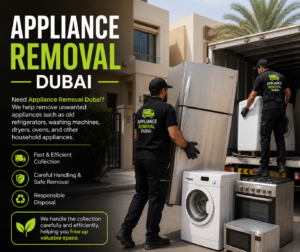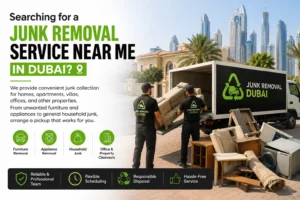
A workshop replaces its shelving and ends up with a stack of steel frames in the corner. A villa swaps out an old fridge, a washing machine, and a broken air conditioner, and all three end up sitting in the garage. An office upgrade leaves behind a pile of cables, server rails, and metal cabinets that nobody wants but nobody can put in a normal bin either.
What these have in common is that the material is not simply rubbish. Metal, appliances, cabling, and equipment usually have some recovery value, and they follow a different handling route to general waste. That changes how the collection is planned: sorting matters more, weight matters a lot, and some items need specific handling before anything else can happen to them.
This guide covers how scrap removal Dubai services approach a collection, what typically counts as scrap, what affects the job, and how to get a property ready before the vehicle arrives.
What Is Scrap Removal?
Scrap removal is the collection and transport of materials that still hold recovery or recycling value once they are no longer useful in their current form. In practice that usually means metal, appliances, electrical equipment, cabling, and machinery.
The distinction that matters is the material, not the setting. A broken metal desk frame from an office and a discarded steel gate from a villa are both scrap, because the underlying material can be recovered. A cracked plastic storage box from the same property generally is not.
One point worth setting straight early: scrap having recovery value does not automatically mean a provider pays for it. Whether any value comes back to the property owner depends on the material, the quantity, its condition, how much sorting and labour is involved, and wider market conditions at the time. Some collections are straightforward removals; others may be treated differently. It is a question to raise directly with the provider rather than assume either way.
What Counts as Scrap?
Scrap covers a fairly wide range of material, and providers differ in what they take.
Ferrous Metal
Steel and iron — shelving, gates, frames, pipes, railings, structural offcuts, old furniture frames. Ferrous metal is magnetic, which is the quickest way to tell it apart at home, and it tends to be heavy relative to its value.
Non-Ferrous Metal
Aluminium, copper, brass, and similar. Common sources include window and door frames, radiators, plumbing fittings, cabling, and parts stripped from equipment. Non-ferrous metal is usually lighter and generally carries higher recovery value than ferrous.
Appliances and White Goods
Fridges, freezers, washing machines, ovens, dryers, and air conditioning units. These are a mixed category: they contain recoverable metal, but units with refrigerant gases or sealed systems typically need specific handling before the metal can be recovered, so they are not always treated as ordinary scrap.
Electronic Scrap
Computers, servers, monitors, printers, network equipment, and similar. Electronic scrap is usually handled through its own route rather than mixed in with general metal, because of the mix of materials inside.
Cables and Wiring
Offcuts, redundant runs, and stripped-out installations. Cabling is common after office refits and electrical work.
Machinery and Equipment
Workshop tools, compressors, motors, pumps, generators, and industrial equipment. Larger items usually need to be assessed individually because of weight, dismantling, and lifting requirements.
Not everything is suitable for a standard scrap collection. Materials that are hazardous, chemical, pressurised, contaminated with oils or fuels, or otherwise require specialist handling generally sit outside what a scrap pickup covers. Anything uncertain is worth describing to the provider before collection day rather than adding it to the pile and hoping.
Scrap Removal vs Junk Removal vs Debris Removal
These three overlap in practice but are not the same thing, and knowing which one fits saves a wasted visit.
| What it centres on | Typical examples | |
|---|---|---|
| Junk removal | Unwanted items being cleared out | Sofas, mattresses, boxes, general clutter |
| Debris removal | Leftover or broken material from property work | Offcuts, packaging, broken fixtures, renovation leftovers |
| Scrap removal | Material with recovery value | Metal, appliances, cabling, machinery |
A single clearout often produces all three at once. The practical approach is to describe what is actually on site and let the provider work out how it splits, rather than trying to force everything into one category. If the bulk of what you have is leftover material from property work rather than metal, a debris removal service is likely the closer fit, and general household clearouts usually fall under junk removal.
Common Situations That Call for Scrap Collection
Scrap tends to accumulate around specific events rather than gradually. Typical triggers include replacing appliances, an office or retail refit, workshop and garage clearouts, upgrading machinery or equipment, electrical or plumbing work that strips out old material, a property handover, warehouse reorganisation, and clearing a yard or storage area that has been used as a dumping ground for years.
In most of these cases the scrap has been sitting for a while, which affects its condition — and condition affects how it is handled.
Residential Scrap Removal
For homes, scrap usually shows up as appliances and metal items rather than bulk material. Old fridges and washing machines, air conditioning units, metal bed frames, gates and railings, garden equipment, and the accumulated contents of a garage are the common ones.
In villa communities such as Arabian Ranches, Al Barsha, Jumeirah, and Dubai Hills Estate, garage and yard clearouts tend to produce the largest volumes, and ground-level access usually makes loading straightforward. In apartments, the constraint is rarely quantity — it is getting a heavy item out of the unit and down to a vehicle.
Commercial and Industrial Scrap Removal
Businesses generate scrap on a different scale and with different constraints. Offices produce metal furniture, cabinets, cabling, and electronic equipment during refits. Retail units produce shelving, display fittings, and fixtures. Workshops and warehouses produce offcuts, racking, machinery, and equipment.
Commercial collections usually need more planning because of:
- Total weight, which often determines the vehicle required
- Loading bay access and vehicle height restrictions
- Whether items need dismantling before they can be moved
- Business operating hours and building management approval
- Whether the site needs to stay usable during the work
In areas such as Al Quoz, Dubai Industrial City, Jebel Ali, Business Bay, and Dubai Silicon Oasis, site access and permitted vehicle times vary considerably between buildings and free zones. Confirming those details early is usually what determines whether a collection runs to schedule.
How Scrap Removal Dubai Services Work
Exact procedures vary, but most collections follow a similar shape:
- Identify what scrap is on site and roughly how much
- Separate anything requiring specialist handling
- Describe the material types — metal, appliances, electronic, mixed
- Provide the property location and access details
- Confirm what the provider can accept
- Clarify how the material will be handled and whether any value applies
- Arrange a collection time
- Prepare and group the scrap before the visit
- The team arrives and assesses what is there
- Items are dismantled or broken down where needed
- Scrap is loaded and transported
- Material is sorted and directed to the appropriate recovery route
Step six is the one most often skipped, and it is the one that avoids misunderstandings later.
What Affects a Scrap Removal Job?
Requirements depend on the specifics rather than a standard scope. The main factors are total weight and volume, the material types involved, how mixed or contaminated the scrap is, whether dismantling is required, how far items must be carried, floor level and elevator availability, parking and how close a vehicle can get, the distance involved, scheduling, and whether anything needs specialist handling.
Weight deserves particular attention. Metal is dense, and a modest-looking stack can exceed what a small vehicle can legally carry. Describing quantities honestly — even roughly — is what allows a provider to send the right vehicle the first time.
How to Prepare Scrap for Collection
Separate Scrap From Everything Else
Keep scrap apart from general waste and from items that are staying. Mixed loads slow a collection down and can affect how the material is handled.
Sort Metal Where Practical
If you can separate ferrous from non-ferrous, it helps. A magnet is enough — it sticks to steel and iron, not to aluminium, copper, or brass. This is optional, but useful for larger quantities.
Flag Appliances Separately
Mention fridges, freezers, and air conditioning units specifically when arranging the collection, since sealed and gas-containing units often follow a different handling route.
Drain and Empty Equipment
Machinery holding oil, fuel, or other fluids should be flagged rather than presented as ordinary scrap. Do not attempt to drain anything you are not equipped to handle safely.
Note Anything Heavy or Fixed
Large machinery, safes, structural metal, and anything bolted down needs mentioning in advance so the right equipment and manpower are arranged.
Clear the Route
Make sure the path from the scrap to the loading point is clear, and confirm elevator or loading bay access with building management where relevant.
Scrap Removal From Apartments
Apartment collections are constrained by getting heavy items out rather than by quantity. Elevators, corridors, stairs, parking, and building rules all shape how the job runs. In towers around Dubai Marina, JLT, Business Bay, and Downtown Dubai, service elevator booking and permitted loading times are commonly controlled by building management, and a single appliance may need two people and a booked lift slot. Sorting that out before the collection date is usually the difference between a fifteen-minute job and a wasted trip.
Scrap Removal From Villas and Workshops
Villas and workshops tend to produce larger and more varied scrap: garage contents, garden and yard equipment, gates and railings, old appliances, and accumulated metal that has been set aside over the years. Ground-level access generally makes loading easier, though outdoor scrap may have corroded, and heavier items still need planning. Workshops add dismantling and equipment removal to the picture, which usually needs to be assessed on site rather than described over the phone.
What Happens to Scrap After Collection?
Once collected, scrap is generally sorted by material type and directed toward the appropriate recovery route. Metals are typically separated into grades, appliances and electronic items usually follow their own processing paths, and anything that cannot be recovered is disposed of appropriately.
The route any particular load takes depends on the material, its condition, whether it is contaminated with other substances, the quantity, the facilities available, and the practices of the provider handling it. Recovery rates vary by material and by load, and it would not be accurate to claim every item collected is recycled.
DIY Scrap Removal vs Professional Collection
Handling scrap independently means dealing with weight, lifting, a vehicle that can carry the load, the time to sort and transport it, and arranging where it goes. For one or two small items, that can be entirely reasonable.
A professional collection provides loading and lifting assistance, suitable vehicles, dismantling where needed, and an established route for the material. That matters more as weight increases, and considerably more once heavy appliances, machinery, or upper-floor access are involved.
Metal is where the calculation shifts fastest. A load that fits in a car boot by volume may still be too heavy to carry safely or transport legally.
How to Choose a Scrap Removal Service in Dubai
Worth checking: which materials they actually accept, whether they cover your area, whether they handle both residential and commercial jobs, whether they can dismantle and lift, what vehicles they run, how they handle appliances and electronic scrap specifically, how clearly they explain whether any value applies to your material, and how flexible their scheduling is.
Be wary of anyone making broad claims about licences, certifications, recycling percentages, or government approvals that they cannot explain plainly, and of anyone naming firm figures for your material before seeing it. Specific answers about what they can and cannot handle are a better signal than confident marketing.
Common Mistakes
Assuming every metal item is accepted. Mixing hazardous or contaminated material into a scrap load. Underestimating weight — the most frequent one by a distance. Not mentioning appliances with sealed or gas systems. Forgetting that machinery may need dismantling. Overlooking elevator or loading bay booking requirements. Expecting a figure for the material before anyone has seen it. Leaving heavy scrap outdoors long enough to corrode. Arranging collection at the last minute during a handover deadline.
Benefits of Professional Scrap Removal
Heavy lifting is handled by people equipped for it. Dismantling is dealt with on site. Metal, appliances, and electronic scrap are directed to appropriate routes rather than sitting in a garage or yard. Space is recovered — often more than expected, since scrap tends to accumulate in the areas people avoid. And for businesses, a site can be cleared to a workable state ahead of a handover or refit without pulling staff off other work.
Frequently Asked Questions
What materials are collected as scrap?
Metal (both ferrous and non-ferrous), appliances, electronic equipment, cabling, and machinery are the main categories. Exact acceptance varies by provider, so it is worth confirming your specific items.
Is scrap removal the same as junk removal?
No. Junk removal focuses on unwanted items generally, while scrap removal focuses on material with recovery value — primarily metal, appliances, and equipment. A single clearout often involves both.
Will I be paid for my scrap?
Not automatically. Whether any value applies depends on the material, quantity, condition, the labour involved, and market conditions at the time. It is a question to raise with the provider directly rather than assume.
Can old fridges and air conditioners be collected?
Often yes, but these contain sealed systems and refrigerant gases, so they typically follow a specific handling route rather than being treated as ordinary metal scrap. Mention them separately when arranging the collection.
Do I need to sort the scrap myself?
Usually not required, though separating ferrous from non-ferrous metal can help with larger quantities. Keeping scrap apart from general waste is more important than sorting it precisely.
Can businesses arrange industrial scrap collection?
Yes. Workshops, warehouses, offices, and retail units regularly arrange scrap collections, though these often need advance planning around weight, dismantling, site access, and operating hours.
What if the scrap is on an upper floor?
It can still be collected, but elevator access, item weight, and building loading rules need confirming in advance, since heavy items may require additional manpower or a booked service lift slot.
What cannot be collected as scrap?
Hazardous, chemical, pressurised, or heavily contaminated materials generally sit outside standard scrap collection and need a provider equipped for that specific material.
Conclusion
Scrap removal Dubai jobs turn on three things: identifying the material correctly, being realistic about weight and access, and agreeing upfront how the scrap will be handled. Metal, appliances, and electronic equipment each follow their own route, and a collection planned around what is genuinely on site runs far better than one planned around a rough guess. Describe the material honestly, flag anything sealed, heavy, or fixed in place, and confirm access before the date is set.
Have metal, appliances, or equipment that needs clearing? Contact Our Team with the details, or Arrange Your Collection for a time that suits the site.