Most people only think about junk removal when a room stops working the way it should. The spare bedroom has become storage, the villa garage no longer fits a car, or the office storeroom is stacked with unused monitors. The question then turns practical: how does junk removal work?
This guide explains the full process as it runs in Dubai, from your first message to the moment your items reach a recycling stream, a donation partner or a licensed disposal site.
What Is Junk Removal?
Junk removal is a collection service that takes unwanted items out of a property and directs them into the correct waste, recycling or reuse stream. It differs from a building bin service in three ways: a trained crew lifts and carries, the vehicle suits bulky goods, and the load is separated rather than tipped in one place.
A typical job covers items that do not belong in a household bin:
- Sofas, beds, wardrobes and dining sets that will not fit through a waste room door
- White goods such as fridges, washing machines, ovens and split air conditioning units
- Renovation leftovers, packaging, offcuts and general clutter
- Office desks, chairs, partitions, shelving and archived paperwork
- Garden waste, garage contents and storeroom overflow
It is also different from house moving. Movers relocate what you keep; a junk removal crew handles what you have decided to release. The two work best when the clear-out happens first.
Why Professional Junk Removal Matters in Dubai
High-rise living is the first complication. In towers around Dubai Marina, JLT and Business Bay, bulky items cannot simply be carried down a fire stair. Most buildings expect a service lift booking, advance notice and, in many cases, a movement permit from the management office.
Villa communities bring different problems. A garage clear-out in Arabian Ranches or Dubai Hills Estate produces far more weight than expected once tyres, paint tins, timber and garden waste are added together, and leaving bulky items beside a bin area is discouraged in most communities.
Then there is the climate. Between May and September, carrying loads through a car park is demanding work, and heat fatigue is the main reason self-managed clear-outs stall halfway. Separation matters too: metal, cardboard, timber, electronics and general waste follow different routes, which is how scheduled waste collection in Dubai is organised.
Who Can Benefit from Junk Removal Services?
The service is broader than most people assume, and it is almost always driven by a life event rather than by clutter alone.
- Homeowners and villa owners clearing garages, maid rooms and gardens before a renovation
- Apartment residents replacing furniture, where the old sofa cannot sit in a corridor
- Tenants moving out who need the unit returned in clean condition
- Landlords preparing a property between tenancies
- Property managers handling multiple units or basement storage
- Business owners and office managers retiring workstations, signage or old stock
- Families downsizing, where sorting matters as much as removal
For a full property rather than a few items, a planned house clearance in Dubai or a larger villa clearance is the better fit, since both are organised room by room.
Step-by-Step: How Does Junk Removal Work?
Reputable operators follow broadly the same sequence. Knowing it in advance removes most of the uncertainty on the day.
Step 1: Describing What Needs to Go
It starts with a short conversation by phone, WhatsApp or a website form. The useful details are the item list, property type, floor level and lift availability. One wide photo of each room says more about volume than a written list, so the right vehicle and crew size can be assigned first time.
Step 2: Scheduling and Access Planning
In Dubai this step carries real weight. Expect questions about vehicle parking, basement height limits, service lift reservations, and whether building management requires a permit or refundable deposit. Sorting this out early is the biggest factor in finishing on time.
Step 3: On-Site Assessment
The crew walks the property with you before touching anything. This confirms real volume, flags heavy or awkward pieces, identifies what needs dismantling, and separates what is leaving from what is staying. A wardrobe you meant to keep should never end up on the truck.
Step 4: Confirming the Price Before Work Begins
The team then confirms the price based on what they can see, and nothing is loaded until you agree. If the volume is larger than described by phone, that is the moment to discuss it rather than after the truck is full.
Step 5: Sorting Into Reuse, Recycling and Disposal
Sorting begins at the property, not the yard. Crews create three groups: items in good condition suitable for donation or resale, materials with recycling value such as metal, cardboard and timber, and genuine waste. Separating early gives a cleaner recycling result.
Step 6: Careful Loading
Loading is where damage happens if a team is careless. Good crews dismantle bed frames and wardrobes rather than forcing them through doorways, use trolleys and straps for appliances, protect lift interiors and door frames, and strap heavy items down for transit.

Step 7: Clearing the Space Behind You
Once the load is out, the crew sweeps the cleared area and removes screws, packaging and dust left by furniture that had not moved in years. That matters for tenants handing back a unit, since a swept room photographs better at inspection.
Step 8: Transport to a Licensed Facility
The loaded vehicle travels to a sorting yard or transfer point rather than a single dumping ground. Licensed operators use permitted disposal sites and keep the paperwork for each load. For commercial clear-outs, ask for that documentation.
Step 9: Final Sorting, Recycling and Disposal
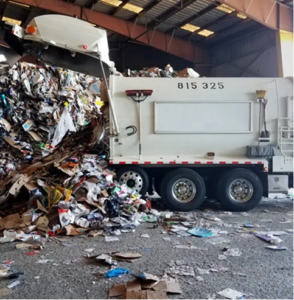
At the facility the load is broken down again. Metals are pulled out, cardboard is baled, timber is separated, electronics go to specialist handlers, and only the residual fraction reaches landfill. This stage is invisible to customers, which is why it is worth asking about.
What Items Can Be Collected?
Most non-hazardous household and commercial items can be taken in a standard collection.
| Category | Typical Items |
|---|---|
| Furniture | Sofas, mattresses, bed frames, wardrobes, dining tables, desks |
| Appliances | Fridges, freezers, washing machines, ovens, water heaters |
| Electronics | Televisions, monitors, printers, computers, servers, cables |
| Household clutter | Boxes, clothing, toys, kitchenware, decor, books, luggage |
| Office and retail | Chairs, partitions, filing cabinets, shelving, signage, display units |
| Outdoor | Garden waste, patio furniture, barbecues, planters, play equipment |
| Renovation offcuts | Timber, packaging, small quantities of tiles and fittings |
Single-category jobs are common. A one-off furniture removal in Dubai or an appliance removal often takes under an hour, while a garage cleanout needs a longer window because the volume behind a garage door is almost always underestimated.
Items That Need Special Handling
Some materials cannot travel in a mixed load. Mention them when booking so the right handling is arranged, or so you can be told honestly that a specialist contractor is needed.
Single-category jobs are common. A one-off furniture removal in Dubai or an appliance removal often takes under an hour, while a garage cleanout needs longer, because the volume behind a garage door is always underestimated.
What Happens to Your Junk After Collection?
This is the part customers see least and ask about most. Once the vehicle leaves your building, the load follows a predictable sequence.
Some materials cannot travel in a mixed load. Mention them when booking so the right handling is arranged, or so you can be told honestly that a specialist contractor is needed.
That sequence is the difference between a service that genuinely reduces landfill volume and one that moves your items a few kilometres away. Recurring garbage removal in Dubai for buildings and businesses runs on the same principle on a repeating schedule.
Recycling, Donation and Responsible Disposal
Recycling outcomes depend heavily on how clean material is when it arrives. Cardboard soaked in food waste is worth very little; the same cardboard kept dry is straightforward to process.
- Metals from bed frames, appliance shells and shelving are almost always recovered
- Paper and cardboard are baled, provided they are dry and uncontaminated
- Timber from flat-pack furniture and pallets can often be reprocessed
- Textiles in wearable condition can go to donation partners; damaged fabric usually cannot
- Electronics are dismantled so boards, metals and plastics are separated properly
Donation deserves a realistic note. Charities accept items that are clean, complete and genuinely usable. A dining set with all its chairs is welcome; a stained mattress, a sofa with a broken frame or an appliance that no longer runs is not, however well intentioned the offer.
Factors That Affect Junk Removal Pricing
Pricing is usually built around volume, with adjustments for effort and disposal cost. No two properties are identical, so the honest answer is that it depends on a handful of measurable things.
- Guessing the volume. Calling it a few items when it is a full storeroom means an undersized vehicle
- Leaving belongings inside furniture. Documents and jewellery turn up in drawers surprisingly often
- Ignoring building rules. Arriving without a booked lift or permit can stop a job before it starts
- Hiding hazardous items in the load. Buried paint tins and batteries create a real safety problem
- Booking on the last day of a tenancy. No buffer means no room to recover if access is delayed
- Assuming everything is recyclable. Condition, contamination and material type all set limits
- Not confirming what is included. Dismantling, sweeping and disposal should be discussed, not assumed
One practical tip: ask whether the price includes labour, transport and disposal. Some of the lowest headline figures exclude the disposal fee, which is the part that cannot be avoided.
Common Mistakes People Make Before Booking
- Volume. How much space your items occupy in the vehicle is the main driver
- Weight and material. Rubble, tiles and sand are heavy for their size, so disposal costs more
- Access. A ground floor villa clears faster than a fifteenth floor apartment sharing one service lift
- Dismantling time. Wardrobes, bunk beds and fitted units add crew hours
- Location. Travel distance and site access across Dubai affect scheduling
- Timing. Urgent, weekend or after-hours collections depend on crew availability
- Special handling. Refrigerant recovery, e-waste and hazardous routes carry their own costs
Expert Tips for a Smooth Junk Removal Experience
- Photograph each room and send the images with your first message
- Group everything that is leaving into one area, and tape a note on anything staying
- Empty drawers, cupboards and wardrobes completely before the crew arrives
- Defrost and drain fridges a day ahead to avoid water on your floor
- Reserve the service lift and confirm the parking bay the day before
- Clear a walking path from the room to the lift or front door
- Set donation items aside so they stay clean during loading
- Be present for the walkthrough, or nominate someone who knows what is staying
Benefits of Hiring a Professional Junk Removal Company
Doing it yourself works for a handful of small items. Beyond that, the arithmetic changes quickly.
- Safety. Mattresses, treadmills and wardrobes cause injuries when lifted without straps or a second trained pair of hands
- Time. A crew of two or three clears in one visit what one person spreads across a weekend
- Correct disposal. Licensed operators already hold the routes for recycling, e-waste and residual waste
- Property protection. Lift panels, door frames and marble flooring are expensive to repair
- Vehicle suitability. A family SUV cannot take a three-seater sofa, and repeated pickup hire rarely costs less
- Compliance. Offices and retail units often must show a landlord documented disposal
If your timeline is tight, ask about same-day junk removal in Dubai. It is often possible, but never automatic: availability depends on crew scheduling, your location, building access and the size of the load, so it should always be confirmed rather than assumed.
Frequently Asked Questions
How long does a junk removal appointment usually take?
A few items from an accessible apartment can be finished in thirty to sixty minutes. A full storeroom or garage typically runs two to four hours, and a whole villa can take most of a working day. Floor level, lift waiting and dismantling stretch the timeline more than the item count.
Do I need to be at the property during collection?
Someone should be there at the start to confirm what is leaving and at the end to check the cleared space, but it does not have to be you. Landlords and property managers regularly authorise a building representative or housekeeper to handle the walkthrough.
Can a crew clear a high floor if the service lift is unavailable?
Sometimes, but it changes the job. Carrying furniture down a stairwell takes far longer, needs more people and is unsafe for very heavy pieces. Contact building management before the booking date and reserve a lift slot; if that is not possible, say so early so crew size and timing can be planned realistically.
Is same-day collection realistic in Dubai?
It is often achievable, particularly for smaller loads in central areas such as Business Bay, Downtown Dubai or JVC. It cannot be promised as a rule, because it depends on the existing schedule, travel distance, short-notice building access and load size. Calling early in the morning improves the odds.
What happens if there is more or less than I described?
The on-site assessment exists for this. If the volume is smaller, the price should come down before loading. If it is larger, the crew explains the difference and you decide whether to proceed, reduce the load or split it across two visits.
Do I have to sort my junk before the crew arrives?
No, sorting is part of the service. Two small actions help though: keep anything you intend to donate separate and undamaged, and set aside hazardous items such as paint, batteries and chemicals so they are identified rather than discovered mid-load.
Can a property be cleared while people are still living in it?
Yes, and it is common in family villas and shared offices. The crew works room by room with clearly marked keep zones and keeps access routes open. Occupied clear-outs simply need a slightly longer walkthrough at the start to establish boundaries.
Final Thoughts
Junk removal is less complicated than it looks once the sequence is visible: describe the items, plan access, confirm volume and price on site, sort into reuse, recycling and disposal, load carefully, then route each material where it belongs. What goes wrong is usually logistical rather than physical.
For Dubai residents, the value of a licensed team is simple: building access is handled properly, the heat and heavy lifting are not your problem, and your items follow a documented disposal route. Judge any company against those three points.
Book Your Collection With Our Dubai Team
Ready to clear a room, a garage, a villa or an office? Tell us what needs to go, send a few photos, and we will plan the access and the vehicle around your building.
Contact our team to schedule your pickup, or read more about our full junk removal services in Dubai before you decide.